Never before has there been a time that is more important for professional laser technology to come into play for independent makers, creative firms, and workshop specialists than 2026. Personalized products are becoming more popular among consumers around the globe, which drives the demand for smaller-batch manufacturing. At the same time, small-batch manufacturing is gaining momentum as an alternative solution to traditional production processes. Moreover, workshop repair and fabrication experts are actively looking for ways to reduce time consumption while delivering superior results using equipment that does not require industrial-level maintenance. In such a way, engraving and welding technology play an important role here. XLaserLab, one of the leading companies in laser engraving and welding tools for customers and business owners, has decided to launch the first-ever Brand Week 2026 event, allowing buyers to purchase all their product line at unprecedented prices.
XLaserLab holds an annual Brand Week event, offering buyers discounted prices on their professional laser machines,s such as engravers, welders, and cleaners. Furthermore, buyers will have access to all available bundles and compatible accessories. This is a great opportunity for those who are interested in laser technology, have been monitoring this product range offered by XLaserLab, and are now ready to make purchases.all items now have special promotional prices., the event timing is well considered, coinciding with peak seasonal sales that include Father’s Day gifts, summer custom production items, and workshop projects.
What should be noted about Brand Week is the fact that this is not only an event with special discounts but also the best possible time to acquire products within XLaserLab’s professional laser machine ecosystem at the best available prices. XLaserLab is not specialized in manufacturing one type of product; instead, it offers a whole range of laser engraving and welding solutions, and only during this event will you have a chance to see all of them at reduced prices.
Cold-Light UV Technology – Engineering Solution Changing Engraving Forever
The flagship of XLaserLab’s professional laser engraving machine range is the new 10W UV cold-light laser engraver, representing a qualitative leap in terms of performance of laser technology. To understand this point better, one needs to understand the engineering specifics of cold-light UV technology versus existing laser engravers working on the basis of diodes and CO2 lasers.
Standard engravers use the process of burning/melting the surface being engraved at the point of contact, which limits the applicability to fragile materials. Cold-light engraving relies on a photochemical reaction to break down molecular bonds at the point of contact, resulting in clean engravings that do not experience any thermal damage whatsoever. The net effect is a highly efficient machine that can engrave on such diverse materials as glass, clear plastic, acrylic, leather, coated metals, ceramics, and advanced plastic,s in addition to metal. Such variety in material is impossible with conventional engravers without damaging the material being processed.
From Single-Function Tools to Integrated Workshop Systems — The Welding Revolution
Whereas engraving is the first component in the ecosystem created by XLaserLab’s Brand Week marketing campaign, the company’s laser welding line covers a second important segment — and offers unique solutions driven by a holistic approach to operation.
The centerpiece of the company’s welding equipment lineup is the 3-in-1 laser hand-held system designed to combine welding, cleaning, and cutting of metal on various materials, including steel, aluminum, stainless steel, copper, and galvanized metal. This way, customers who currently operate different machines for performing welding, cleaning, and cutting can benefit significantly from replacing them with an integrated device that will allow saving equipment costs, avoid job switching downtime, and enjoy better quality in terms of narrower and cleaner welds that require much less post-weld finishing when compared to MIG and TIG techniques.
Making the Investment Decision — What Every Maker and Workshop Professional Should Know
For hobbyists and professional workshops looking to invest in their first-ever laser tool, there is a specific window of time that provides advantages over any other period in the year — namely, Brand Week.
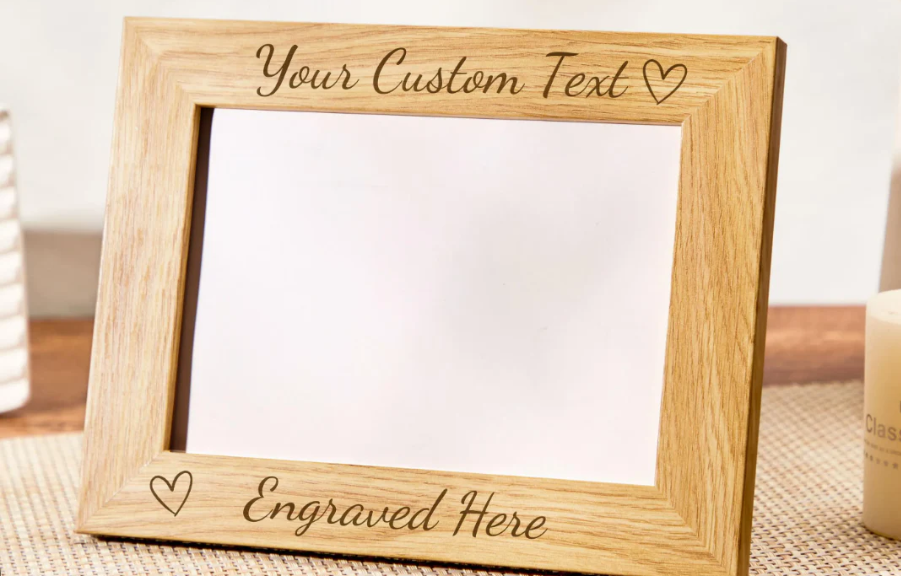
However, the most crucial consideration that needs to be made before any decision on buying should be the speed of return on investment. In terms of engraving-related small businesses, the answer would be contingent upon the type of product, production scale, and variety of material options. It can be said, without the risk of generalizing, that the results of research related to the field of laser engraving ideas that personalize consumer goods, such as customized leather items, personalized drinkware, personalized wooden keepsakes, engraved pictures, and company-branded accessories, constitute both highly profitable and fast-selling product categories. The ability to produce these types of products at a professional level will turn out to be an asset, generating profit, rather than a cost of choice, and Brand Week pricing will help reduce the payback period considerably, in comparison with regular pricing.
As far as workshop professionals are concerned, the calculations here should also be fairly easy to make. A laser welding machine, cutting down on time spent per job, avoiding the need for reworking, and combining three different functions within a single machine would mean savings from the very first week of work. The education provided by the Academy platform of XLaserLab, which covers engraving as well as welding, will prove helpful in this regard, providing the buyer with all necessary guides, tutorials, and educational resources on how to start working with the new technology.
About XLaserLab
Since day one of its existence, XLaserLab has aimed at a goal of changing the world and making professional-level laser technologies not a matter of purchasing power, but rather a question of having the ambition and drive to do it. With its products covering engraving, welding, and cleaning, and the Academy ensuring that all necessary expertise will be provided to a novice user of these technologies, the company is now ready for another annual event that brings the two together. To learn more about Brand Week and other offers of XLaserLab, visit www.xlaserlab.com.