Scientists Develop Eco-Friendly Red Dye from Fungus as Textile Industry Faces Sustainability Pressure
A team of researchers has unveiled a breakthrough in sustainable textile production: a red dye extracted from the rhizospheric fungus Talaromyces purpureogenus PH7. Published in BMC Microbiology (2025), the study shows how this naturally derived pigment could rival synthetic dyes that dominate global textile manufacturing (Hussain et al., 2025).
Durable and Biodegradable Color Performance
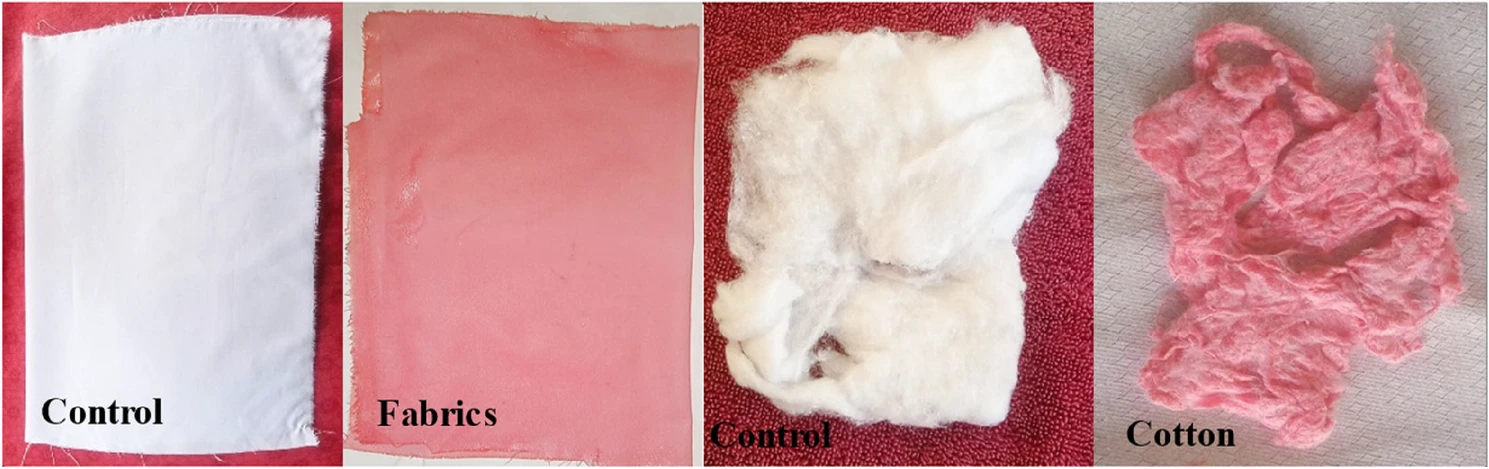
The fungus, cultivated under optimized conditions (28 °C, pH 7, dextrose-based medium), produced a vibrant red pigment with absorption at 520 nm, a standard marker for red chromophores. When applied to cotton fabrics with ferrous sulfate as a mordant, the dye resisted detergent washes, temperature stress, and prolonged UV exposure—key durability tests used by the textile industry (Hussain et al., 2025).
This performance matters. According to the European Commission (2022), synthetic dyes account for nearly 20% of global industrial water pollution, and many show poor wash-fastness, requiring repeated applications that worsen effluent output.
By https://bmcmicrobiol.biomedcentral.com/
Environmental Edge: Beneficial Effluents Instead of Toxic Waste
Unlike synthetic colorants, the fungal dyeing process produced effluents containing antioxidants, flavonoids, phenolics, and indole-3-acetic acid (IAA)—compounds associated with plant growth promotion and oxidative stress mitigation. Such outputs suggest potential positive spillover effects in agriculture rather than ecological damage.
By contrast, research has shown that effluents from azo dyes can carry mutagenic and carcinogenic byproducts (Chung, 2016; Forgacs et al., 2004), with long-term exposure linked to cancer and genetic mutations.
Microbial Pigments vs. Traditional Natural Dyes
Natural pigments like colorant e120 (carmine) are not new. Derived from cochineal insects, this dye has been used for centuries in textiles. However, carmine production faces supply limitations and ethical concerns, as highlighted by EFSA (2015). Plant-based pigments like curcumin or annatto, meanwhile, often suffer from poor solubility and instability under light or heat (Samanta & Konar, 2011).
Microbial pigments offer advantages: year-round availability, independence from agricultural cycles, and scalability through fermentation. Studies on Monascus purpureus and Fusarium species already show strong industrial potential (Mapari et al., 2010). T. purpureogenus now adds to this growing portfolio with evidence of durability and bioactive benefits.
Regulatory and Industrial Implications
The textile sector consumes up to 1–2 million liters of water daily per 50,000 meters of silk processed (Ghaly et al., 2014). With increasing restrictions on synthetic dye discharge in the EU and U.S., bio-based pigments may soon shift from academic curiosity to industrial necessity.
Still, hurdles remain:
- Yield optimization: microbial pigment production per liter remains lower than synthetic processes.
- Regulatory validation: skin-contact safety testing and REACH compliance will be essential before commercialization.
- Economic scaling: cost models must compete with petrochemical-derived dyes that remain cheap despite ecological costs.
A Promising Path Forward
While commercial adoption is not immediate, the study signals an important shift. As Hussain et al. (2025) note, T. purpureogenus not only delivers a biodegradable, stable red pigment but also demonstrates chromium toxicity alleviation up to 800 µg/g, indicating dual value in bioremediation and dyeing.
If scaled successfully, fungal pigments could enable fashion and textile industries to embrace bright, lasting colors without toxic legacies—a critical step toward genuine circular sustainability.